A macOS app that keeps AI agent essentials visible while you work.

Download for FreeFree 3-day trial · Apple silicon
ClaudeCodexCursorGrokHermesOpenCodeAntigravity

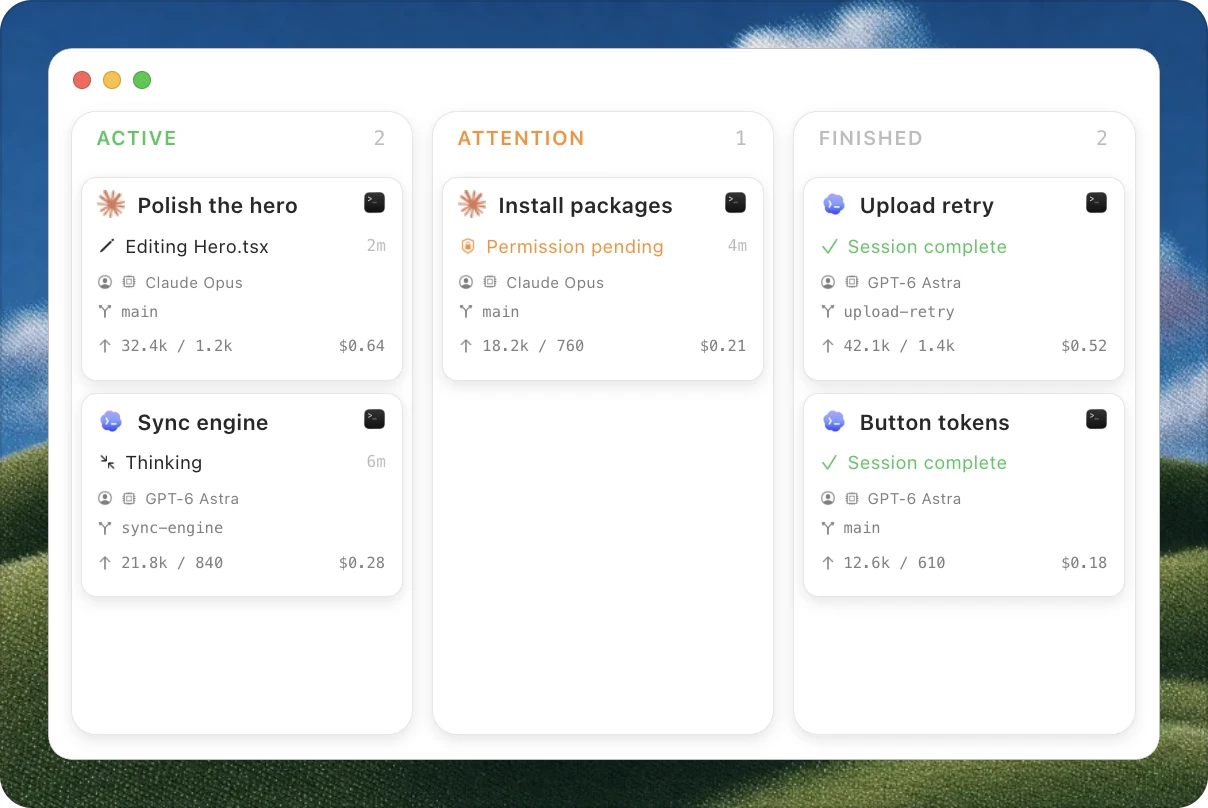
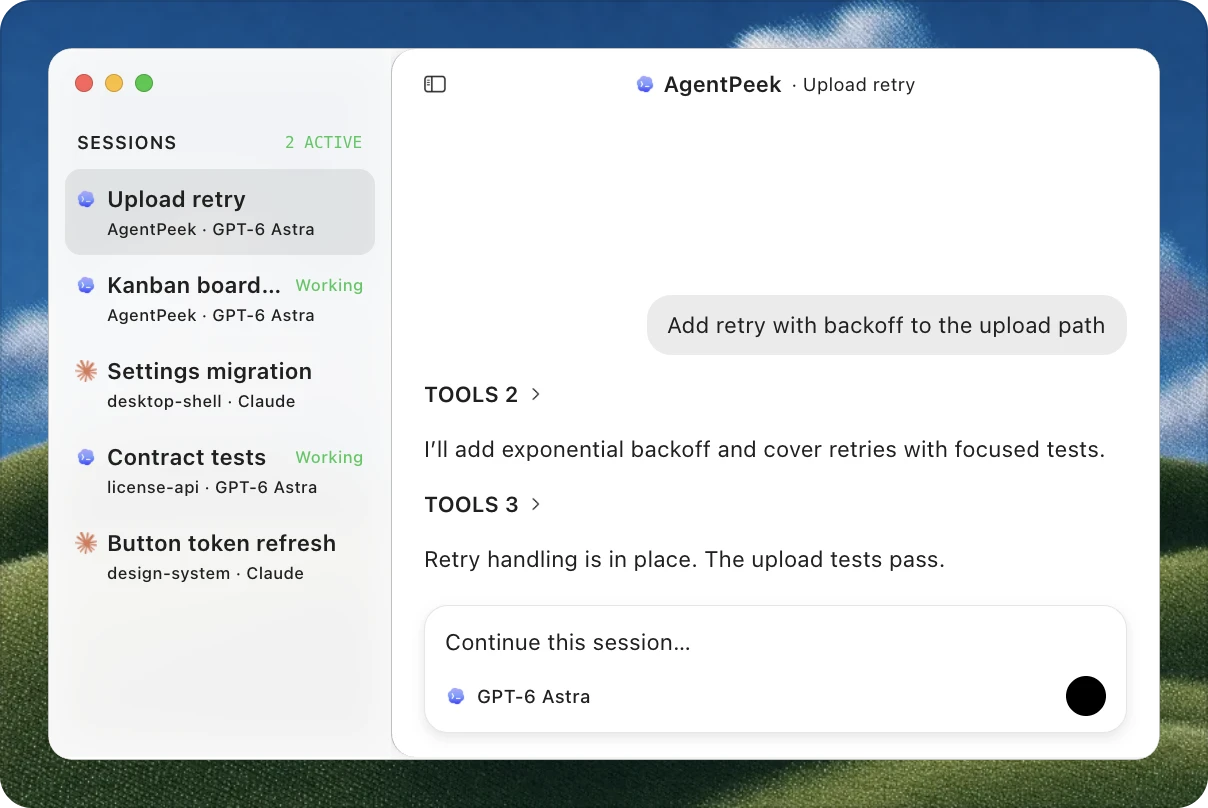
See everything your agents do

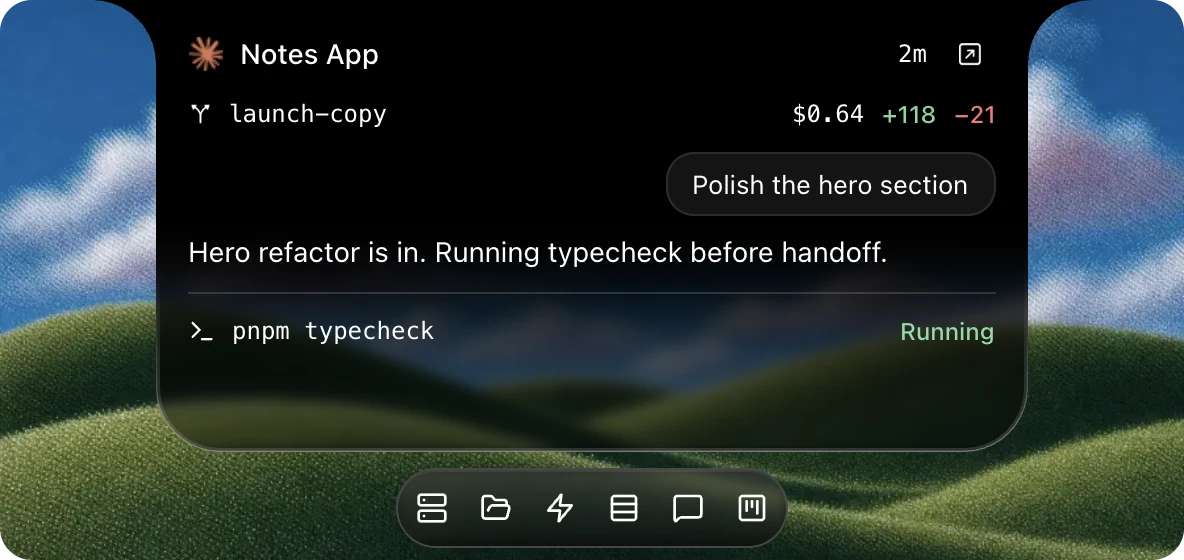
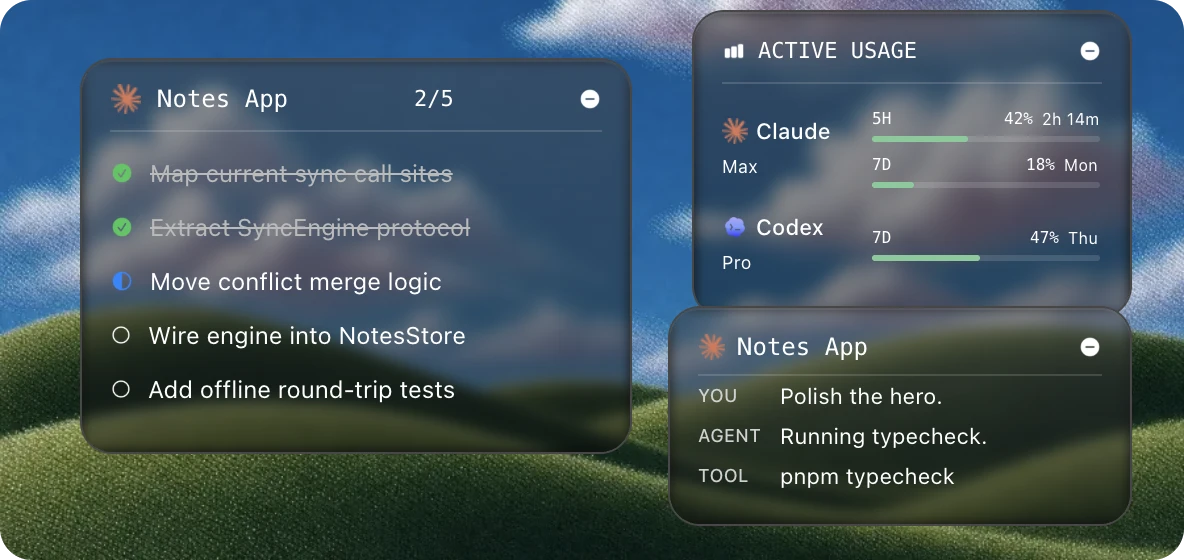
Live sessions from Claude Code, Codex, Cursor, Grok, Hermes, OpenCode, and Antigravity in one place, sorted by project.

Answer without breaking flow

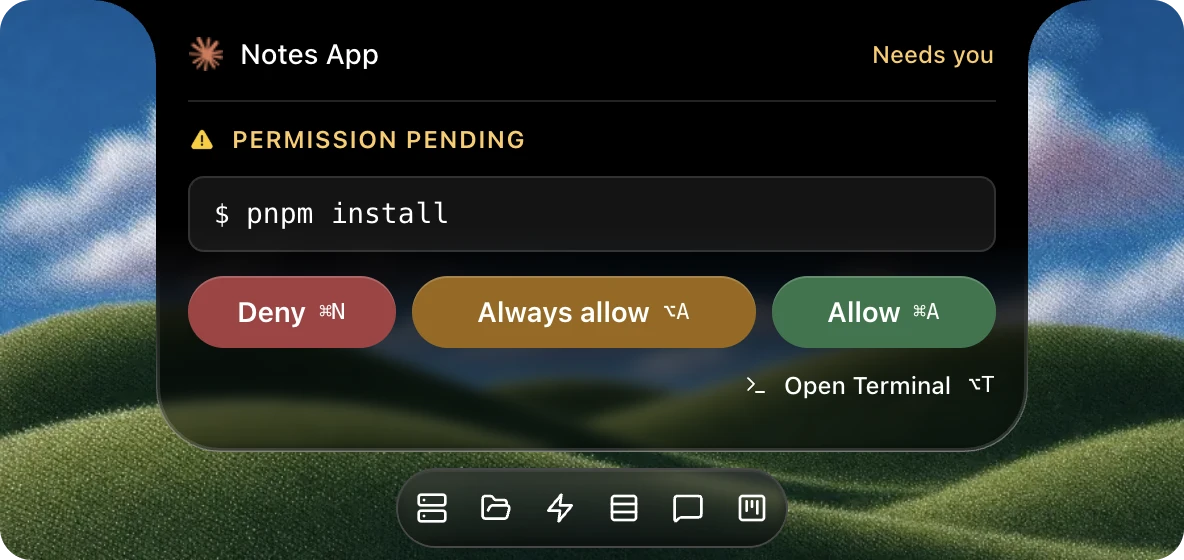
Plans, permissions, and questions surface in the notch, ready for a keystroke, never a window switch.

See limits before they land

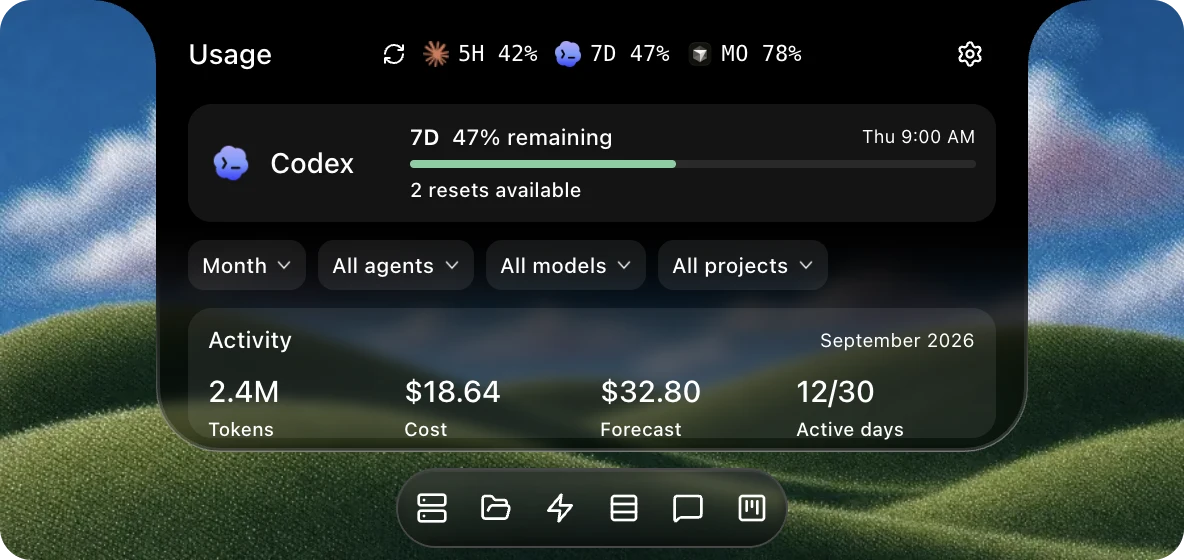
Token usage, rate limit windows, weekly limits, monthly spend, and API cost, whatever each agent tracks, live.

Everyday tools, one click away

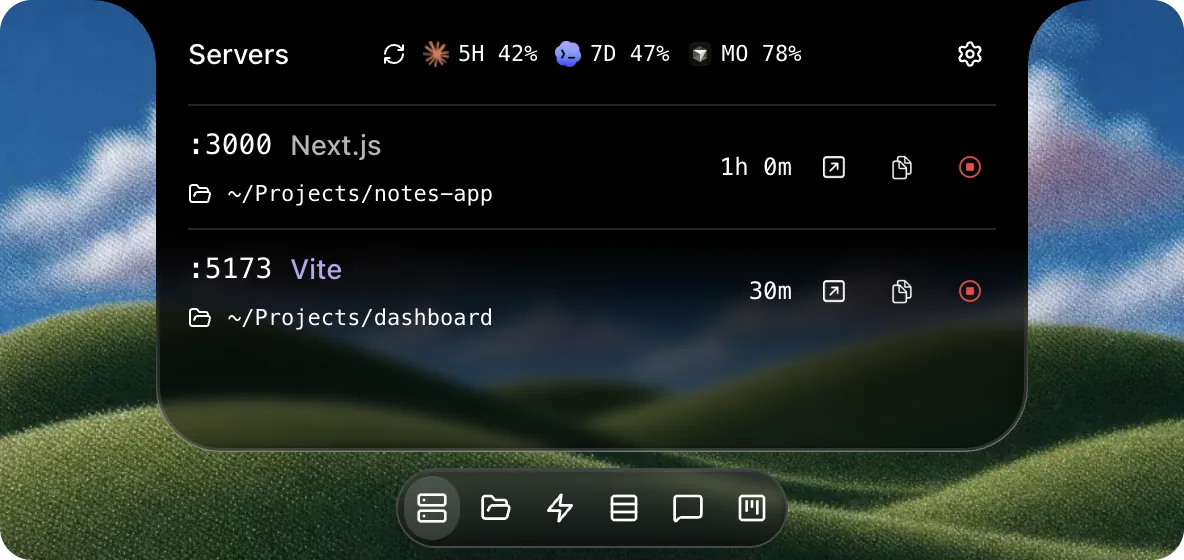
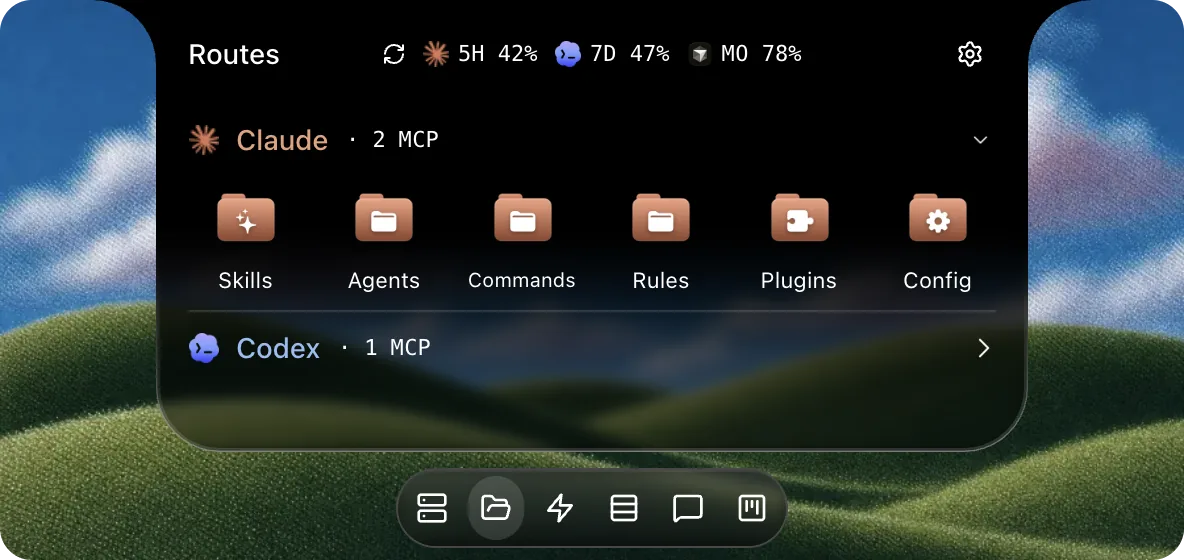
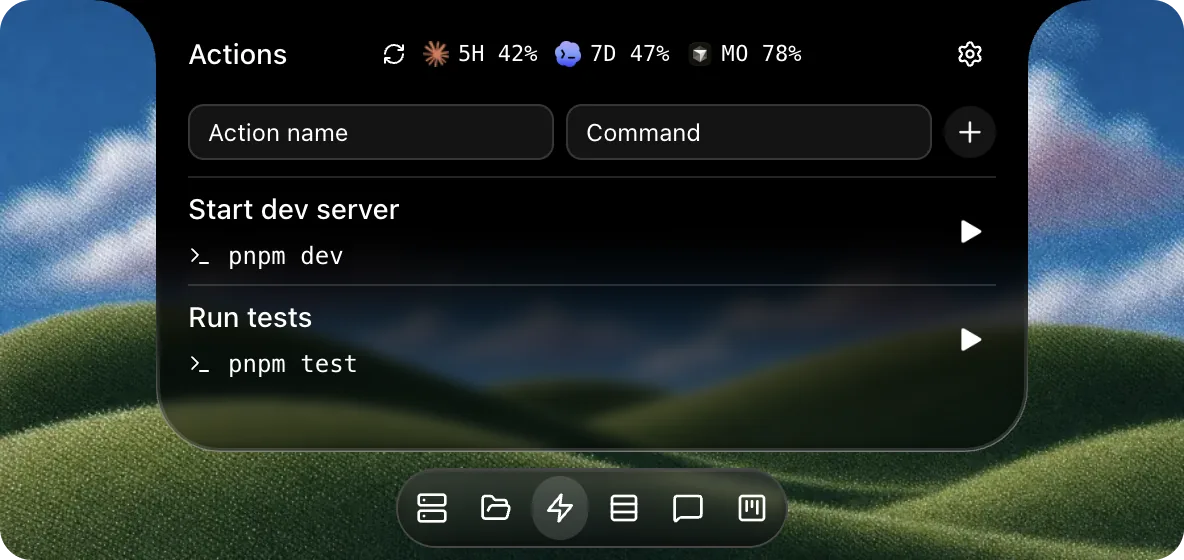
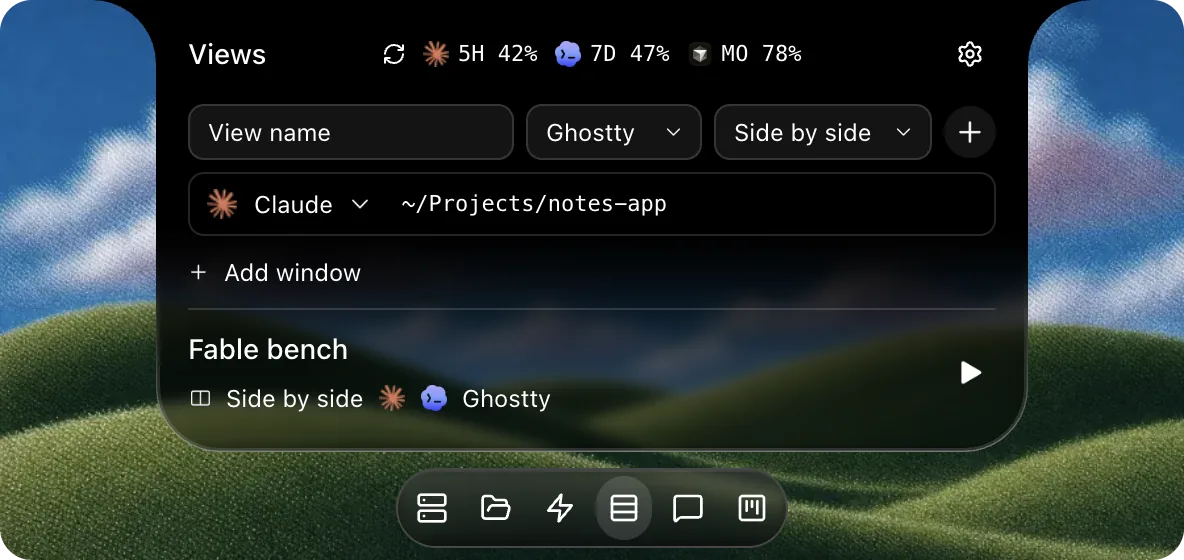
Local servers, quick routes, views, and fast actions in the notch, without ever leaving your editor.

Lifetime Pricing

One-time purchase
$19/once

Start with 3 days free

Buy a license
  • Claude Code, Codex, Cursor, Grok, Hermes, OpenCode, and Antigravity
  • Answer plans, questions, and permissions right from the notch
  • Usage windows, monthly spend, API cost, and token totals per agent
  • Local dev servers, quick routes, views, fast actions, and tool history
  • Notch and menu bar modes, local-first, nothing leaves your Mac
or download for free

Questions, answered.

AgentPeek is a macOS app that keeps Claude Code, Codex, Cursor, Grok, Hermes, OpenCode, and Antigravity in view from your Mac notch and menu bar. You get live sessions grouped by project, permission prompts, questions, and plans you can answer with a keystroke, and whatever usage each agent reports: token counts, limit windows, monthly spend, and API cost, with a budget alert before a limit lands. The same panel carries your local dev servers, Quick Routes into each agent's skills, config, and logs, Fast Actions that run your own shell commands, Views that open a whole terminal workspace in one click, and a tool call history with the files, commands, and diffs behind every run. It runs entirely on your own Mac.
The first time you open it, AgentPeek sets up small hooks for Claude Code, Codex, Cursor, Grok, Hermes, and OpenCode. Those hooks let it read what's happening on your Mac as you work: active prompts, recent tool calls, diffs, pending permission requests, and the usage each agent reports. Antigravity needs no hooks at all: AgentPeek reads the session logs it already keeps on your Mac. Every new session you start picks them up on its own, and if a CLI update ever disconnects one, Settings has a Doctor that checks and repairs the hooks in a click.
Claude Code, Codex, Cursor, Grok, Hermes, OpenCode, and Antigravity. Run them in any terminal or in their own desktop apps, it makes no difference: they keep their session state in the same places on your Mac, so AgentPeek picks them up either way and shows them from the notch or the menu bar.
As many as your Mac can run. AgentPeek is built for working several agents in parallel: every live session gets its own row, grouped by project, showing its state, the tool it is running right now, reported token usage, files touched, and diff counts. When two sessions want you at the same time, their prompts stack and you arrow between them.
AgentPeek is free for the first 3 days. After that it's a one time payment: $19 for one Apple silicon Mac, $35 for two, or $49 for three, with future updates included. No subscription, ever. It's just me building this on my own, so a license unlocks everything and helps me keep working on it.
Your code stays on your Mac. Session transcripts, diffs, prompts, and token usage never leave it. There are no accounts, no analytics, and no telemetry. AgentPeek only reaches the internet to check your license, to look for updates through Sparkle, and, if you show Cursor usage, to read it from your Cursor account with the sign-in already on your Mac. A license check sends your license key, machine ID, and app version. Starting a trial sends just your machine ID and app version, nothing more.
Whatever each agent reports. For Claude Code and Codex that's the 5-hour and 7-day rate limit windows with progress bars and reset countdowns. Cursor shows its monthly usage, read from your Cursor account with the sign-in already on your Mac. Hermes and OpenCode show monthly token and cost totals from their local session databases. Grok and Antigravity don't expose usage data yet, so their sessions appear without usage numbers. You can also set a budget alert per window, so AgentPeek notifies you before a usage limit lands.
When an agent needs the go-ahead, the notch can auto-expand with the permission prompt: the command or file it wants to touch, rendered in a native panel. Answer without touching the mouse: Command-A to allow, Command-N to deny, Option-A to always allow in Claude Code, and Option-T to jump to the session terminal. Questions and plans work the same way: click an option or type a reply inline, and arrow between prompts when several are waiting. Prefer the terminal to own approvals? Switch prompt handling over in Settings.
Your everyday tools. Local dev servers on ports 3000 to 9999, labeled by framework, with one-click open, copy URL, and a safe stop. Quick Routes that jump to each agent's skills, plugins, config, and logs folders. Fast Actions, your own saved shell commands run right from the panel. And a tool call history per session, with files touched, commands run, and diffs.
Nope, nothing changes. Install AgentPeek, open it once so it can set up its hooks, then keep working exactly how you do now. Run claude, codex, cursor-agent, grok, hermes, or opencode in any terminal, or use the agents' desktop apps. They all read the same config, so either way new sessions show up the moment they start.
The notch and the menu bar are independent toggles, so you can run either one or both. On an external display or a notchless Mac, menu bar mode gives you a compact popover with your active sessions, usage, local servers, and Quick Routes, and the notch pill can match or slim its width when you do use it.
Any Apple silicon Mac running macOS 14 or later. It's a native Swift app built for the M-series chips.
Everything: all current features, unlimited sessions, and every future update. One payment, no account, no subscription. $19 covers one Apple silicon Mac, $35 covers two, and $49 covers three, and it helps fund what comes next.